How to Handle Surveys in the Era of Personal Data Protection
Personal data collection in surveys carries significant risks. Learn about the challenges, real-world breach examples, and how HYOUKA's AI camera system eliminates personal data collection entirely.
Personal information is a major concern when conducting surveys. How should the personal data collected through surveys be handled? With growing consumer awareness around privacy and frequent news of data breaches, this question has never been more critical.
📋 In This Article
- What counts as "personal information"
- Risks and issues in survey data collection
- Real-world data breach examples
- Precautions for survey data collection
- How HYOUKA eliminates personal data collection entirely
What Is Personal Information?
Personal information refers to information about a living individual that can identify a specific person - by name, date of birth, address, facial photo, and so on. It also includes information that can be cross-referenced with other data to identify an individual.

Category | Examples |
|---|---|
Basic Identity | Name, date of birth, address, email address |
Biometric Data | Fingerprint data, facial recognition data |
ID Numbers | Passport, driver's license, My Number card |
Sensitive Data | Race, beliefs, medical history, criminal record (requires explicit consent) |
Source: Government Public Relations Online (gov-online.go.jp)
Risks and Issues in Survey Data Collection
Surveys are increasingly being used as a pretext for fraud and personal data theft. Consumers are growing more wary of responding to unsolicited surveys via email, mail, or phone calls.
Real Case (Nov 2024): Three men were arrested in Tokyo for conducting street surveys in Akihabara and Ueno to collect personal information, which was then used for mortgage fraud. They built a list of 6,600 people.
4 Key Problems with Personal Data in Surveys
# | Problem | Risk |
|---|---|---|
1 | Information Leakage | Names, addresses leak via cyberattacks or internal misconduct |
2 | Misuse of Data | Leaked info used for fraud, spam, or identity theft |
3 | Excessive Collection | Data used beyond original purpose (e.g., sold to third parties) |
4 | Consumer Distrust | Uncertainty about data management prevents honest responses |
Real-World Data Breach Examples
LINE Personal Information Incident (2021)
User information from the LINE messaging app was found to be accessible by a commissioned company in China. This led to multiple local governments in Japan suspending their use of LINE for official communications, highlighting the serious consequences of inadequate data management.
Yahoo! Japan Unauthorized Access (2020)
Unauthorized access to approximately 2 million user IDs raised concerns about the leakage of personal and credit card information. This incident demonstrated that even major tech companies are vulnerable to breaches.
These incidents show that any organization collecting personal data faces inherent risks - regardless of size or technical capability. The safest approach is to minimize or eliminate personal data collection entirely.
Precautions for Survey Data Collection
- Minimize collected information - collect only what is absolutely necessary
- Anonymize/depersonalize data - collect in forms where individuals cannot be identified
- Clarify third-party sharing - notify respondents if their data will be shared
- Strengthen security measures - use SSL encryption and robust data protection
The Solution: HYOUKA - Zero Personal Data Collection
What if you could conduct comprehensive customer surveys without collecting any personal information at all? That's exactly what HYOUKA does.
🔒 How HYOUKA Works
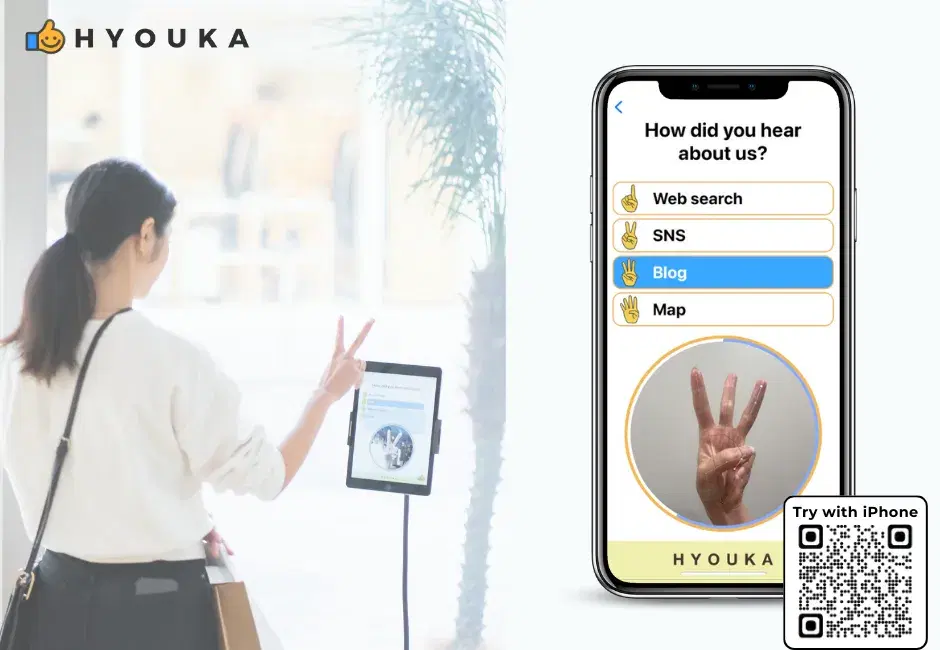
AI cameras on tablets recognize respondent attributes - gender, estimated age group, ethnicity - without ever identifying the specific individual. No names, no contact details, no identifiable data is stored.
- Collects "data" (Yes/No answers, satisfaction rates)
- Never stores "personal information" (no names, emails, or IDs)
- Zero management risk from high-volume personal data storage
Traditional Surveys | HYOUKA | |
|---|---|---|
Personal Data | Names, emails, addresses collected | Zero personal data stored |
Breach Risk | High - data leaks cause major damage | None - nothing personal to leak |
Compliance | Complex GDPR/APPI requirements | Minimal - no personal data handled |
Consumer Trust | Low - people hesitate to share data | High - anonymous = honest answers |
HYOUKA is designed to be a "fun" survey experience where customers feel they are communicating with the store rather than just answering a questionnaire - leading to higher engagement and more authentic feedback.
Conclusion
In the era of personal data protection, the safest and most effective approach to customer surveys is to eliminate personal data collection entirely. HYOUKA's AI camera system achieves this while delivering richer, more honest customer insights than traditional surveys.
🚀 Collect Feedback Without the Data Risk
HYOUKA gathers rich customer insights without collecting any personal data.